The question we hear most after handing over a store: do I need an app? The answer doesn’t depend on the size of your project, but on your customer’s behaviour.
What does each one offer?
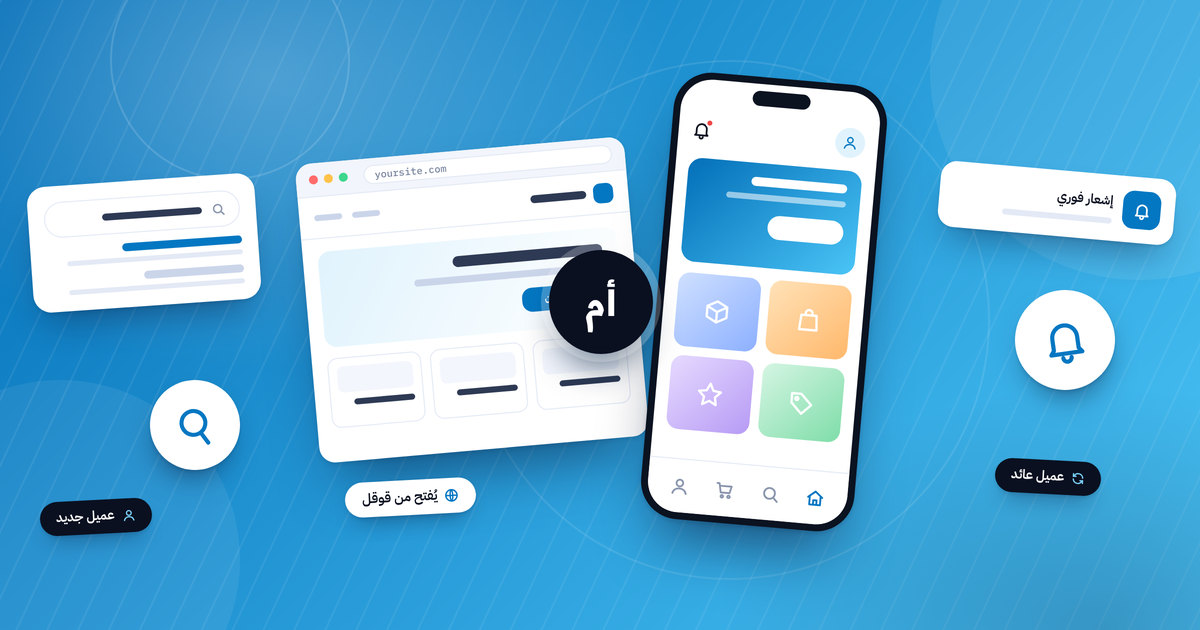
| Responsive website | Mobile app | |
|---|---|---|
| Access | Opens from Google and from any link | Needs downloading from the store |
| New customer | Reaches you easily | Rarely downloads an app they don’t know |
| Returning customer | Searches for you or types the link | An icon on their screen |
| Notifications | Limited | Instant and direct |
| Updates | Published instantly | Go through store review |
| Cost | Lower | Higher, plus developer account fees |
Ask yourself this question
How many times a month does your customer come back to you?
- Once a year or less, like a contracting company or a cosmetic clinic: a website is enough.
- Repeatedly, like food delivery, a supplies store or bookings: an app is worth it.
An app is built for the customer who already knows you and comes back. A website is built for those who don’t know you yet.
When is an app the right decision?
- You have a base of returning customers that justifies the download.
- You genuinely need notifications: order status, appointments, limited offers.
- You need device features: location, camera, working offline.
- Your business model is itself an app: delivery, transport, booking.
And when is it too early?
- The website hasn’t yet proven there is demand.
- You have no plan to persuade people to download it.
- You want one because a competitor has one.
A middle option: the progressive web app
A website that can be added to the home screen with an icon and opens like an app, with no store and no review. It suits those who want to test “does the customer come back?” before investing in a full app.
Its limits: support for notifications and device features varies between systems and browsers, and it doesn’t appear in the two stores.
Native or cross-platform?
- Cross-platform: one codebase that runs on iPhone and Android. Lower cost and faster updates, and enough for most stores and booking apps.
- Native for each system: built twice. Chosen when the app relies on heavy device features.
What nobody tells you
- Developer accounts: registered in your business’s name with each store, for fees the store sets and is paid directly.
- Review: every version goes through the store’s review before publishing, and how long it takes isn’t up to the developer.
- Store policies: both stores have rules on content, payments and privacy, and a version may be rejected.
- Maintenance: mobile systems update constantly, and the app needs to keep up.
Count the full cost
The build price isn’t everything. Add to it:
- Developer account fees with both stores.
- A server for the app, and a notification service.
- Maintenance and updates with every new version of the mobile systems.
- Marketing to persuade people to download it. An app nobody knows about is an app nobody downloads.
The lowest-risk path
Start with a fast, responsive website or store. Watch how many customers come back. When you see returns repeating, add the app connected to the same data.
That’s only possible if the store was built from the start so the app reads from the same stock and orders. Otherwise you’ll run two systems and enter every product twice.
Quick questions
Can I turn my website into an app as it is?
An app that only shows the website inside a frame may be rejected in review because it adds nothing over the browser. An app needs a reason to exist: notifications, an account, device features.
Should I start with one system?
You can, if your audience clearly leans towards one. Otherwise a cross-platform app covers both at once.
How often should I update the app?
At least with every major update of the mobile systems, and whenever you add a feature or fix a bug.
The bottom line
- New customers and Google search: the website.
- Returning customers and notifications: the app.
- Both: the website first, and the app once demand is proven.
The details are in Mobile App Development, and the common questions in the knowledge base.
Need what you just read put into practice?
Our prices are published: packages for every project size, and stand-alone services you can order on their own.