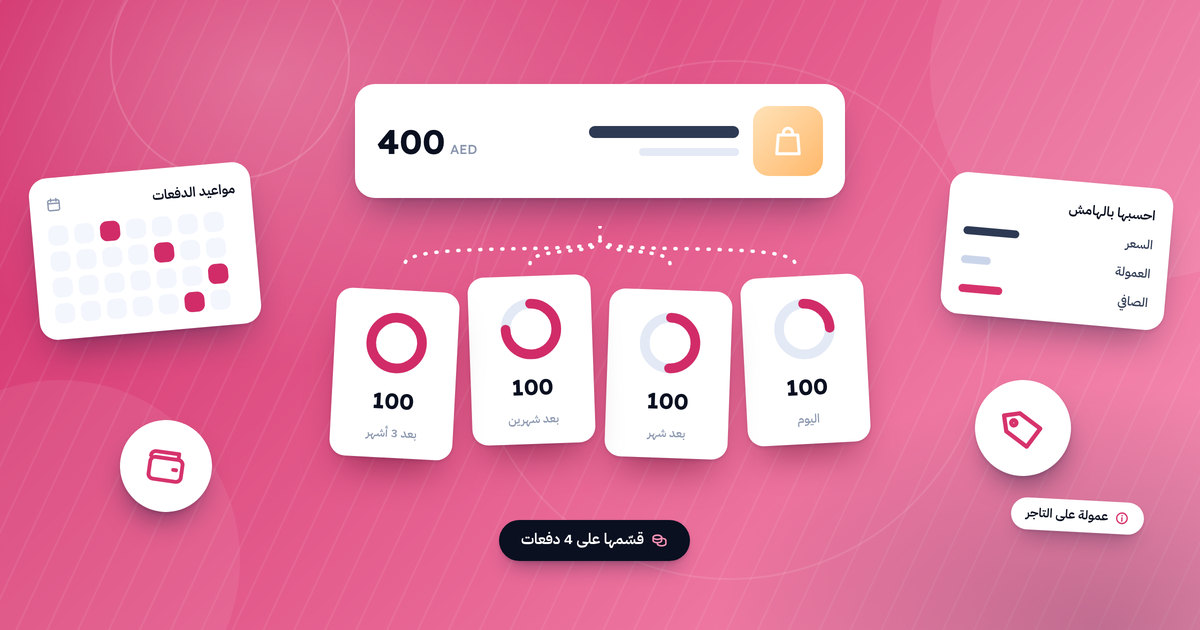
“Buy now, pay later” services let your customer split the order value into instalments, while you receive the order value from the service provider according to your agreement with them.
How does it work?
- The customer chooses instalments on the checkout page.
- The instalment provider approves or declines the customer within moments.
- The customer pays the first instalment, and the rest on later dates.
- The provider transfers the order value to you after deducting its commission.
Collecting the remaining instalments is the provider’s responsibility, not yours.
Who pays the cost?
Usually the merchant. The provider takes its commission from you, and it’s typically higher than a regular card commission. So calculate it before you decide.
A worked example
The figures here are for illustration only. Your actual commission is whatever is in your contract with the provider.
A product priced at AED 1,000 with a margin of AED 300. If the instalment commission were AED 60 per order, you’d keep 240.
- Without instalments: 10 orders a month × 300 = AED 3,000.
- With instalments, even if every order used them: 13 orders × 240 = AED 3,120.
Orders went up 30% and profit barely moved. And if they had only risen to 12 orders, you’d have lost money. That’s why the decision is calculated on margin, not on the number of orders.
When do instalments increase your sales?
- A high average order value: when the customer hesitates at a single large payment.
- Non-urgent products: furniture, electronics, fashion, courses.
- An audience that knows the service: and looks for its badge on the product page.
And when is it not worth it?
- Your profit margin can’t absorb an extra commission.
- The average order is small, so the customer doesn’t need to split it.
- Your real problem is elsewhere: weak photos, expensive shipping, or a long checkout page.
Instalments remove the price objection only. They don’t fix a store the visitor doesn’t trust.
What does the provider ask for?
- A trade licence, a working store and published policies.
- An activity within what they accept. Every provider has a list of what it won’t finance.
- A minimum and maximum order value that can be split.
Ask about all three before you promise the service to your customers.
Common mistakes when adding it
- Showing the instalment badge on products priced outside the minimum and maximum, so the customer is surprised by a declined order.
- Forgetting to update the returns policy to explain what happens to the instalments when a product is returned.
- Charging instalment customers an extra fee without checking the contract. Ask the provider first — the contract may forbid it.
- Switching the service on without testing a complete order from a phone.
Where to show it
Showing it on the checkout page isn’t enough. The customer decides before that:
- A badge under the price on the product page showing the instalment amount.
- A reminder in the cart.
- A clear option on the checkout page.
Steps to add it
- Apply for a merchant account with the instalment provider. They decide on approval and terms.
- Receive the integration keys after approval.
- The provider is connected to the store and the badges are added.
- A complete test order is placed before going live.
Returns with instalments
When a customer returns a product bought in instalments, the order or part of it is cancelled with the provider, who settles the instalments with the customer. Ask before contracting: who bears the commission on a refund, and how long does it take? Then write the answer into your store’s returns policy.
Measure the result
After a month, compare three numbers with before: checkout completion rate, average order value, and net profit after commission. If the first two went up and the third didn’t fall, the decision was right.
Quick questions
Does my customer pay extra fees?
The terms of the instalments and late payments are set by the provider for its customer. Read them so you can answer accurately when asked.
Should I add more than one instalment provider?
You can. But measure with one provider first, and don’t crowd the checkout page with similar options.
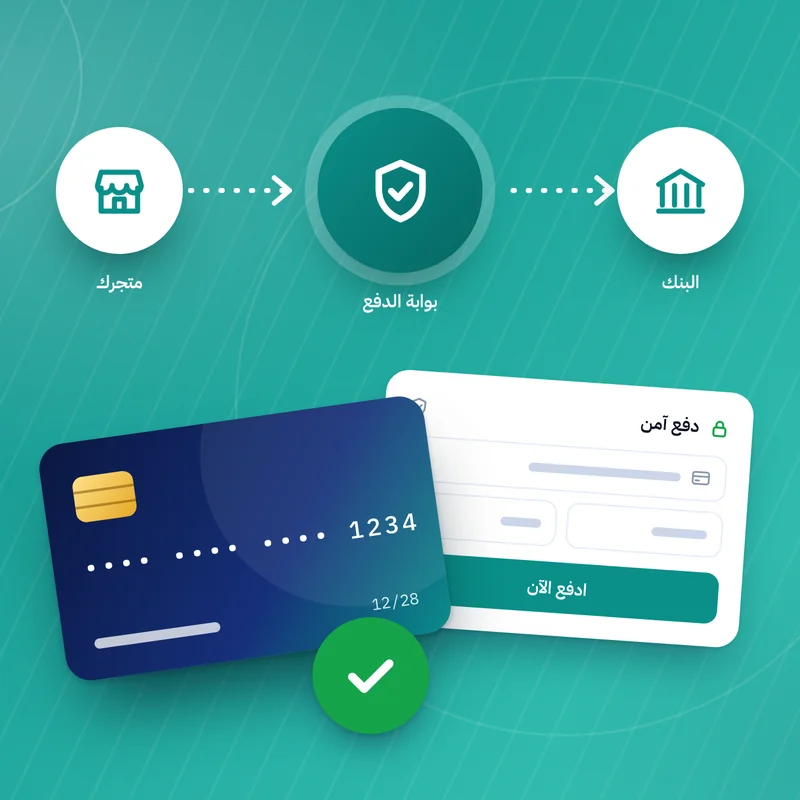
Are instalments an alternative to a payment gateway?
No. They are an extra payment method alongside cards.
The two integration services at a published price: Tabby and Tamara. For the foundation before instalments, read Payment Gateways in the UAE.
Need what you just read put into practice?
Our prices are published: packages for every project size, and stand-alone services you can order on their own.